5 Sneaky Things to Declutter From Your Car Before Summer Ends
Your car has quietly become a second junk drawer, and summer is when it fills up fastest. Run the same 3 questions across 5 spots, sort into 4 simple piles, and clear the whole car in about 25 minutes.
Never miss an update — choose TheDeclutterDesk as your preferred source on Google.
How it works: Tap the button below to open Google’s settings page, then check the box next to TheDeclutterDesk.
Tap the checkbox to turn it blue — that’s how you know it’s set.
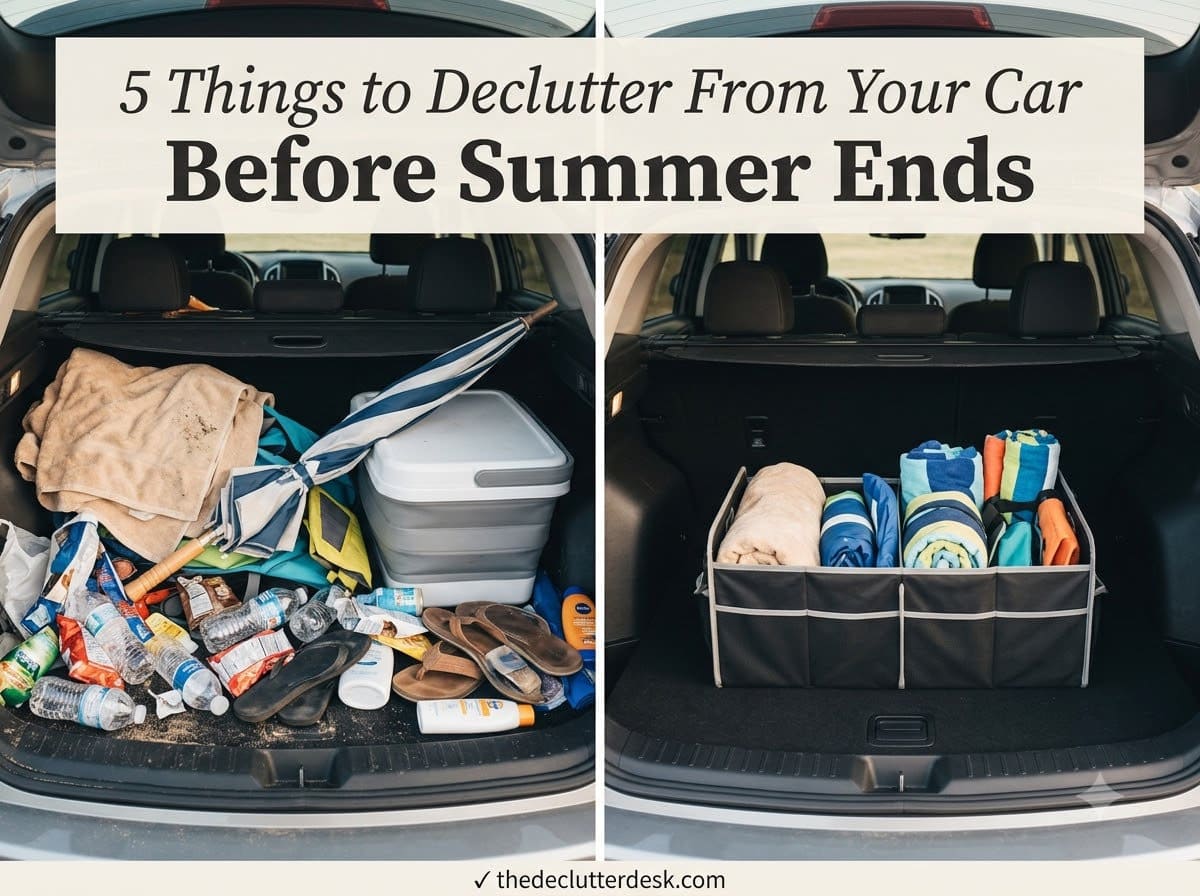
Your car has quietly become a second junk drawer, and summer is when it fills up fastest. Five spots collect the worst of it: trash and food wrappers, kids’ summer and sports gear, paperwork and receipts, “emergency” items you don’t actually need, and beach or pool gear that’s been riding around since June. This isn’t just a tidiness problem.
Extra weight can cost you close to 1% in fuel economy for every 100 pounds you’re hauling around, and a cluttered interior is one of the first things that knocks down a trade-in offer. Run the same 3 questions across every spot, sort into 4 simple piles, and you can clear the whole car in about 25 minutes.
The category: what’s actually living in your car right now
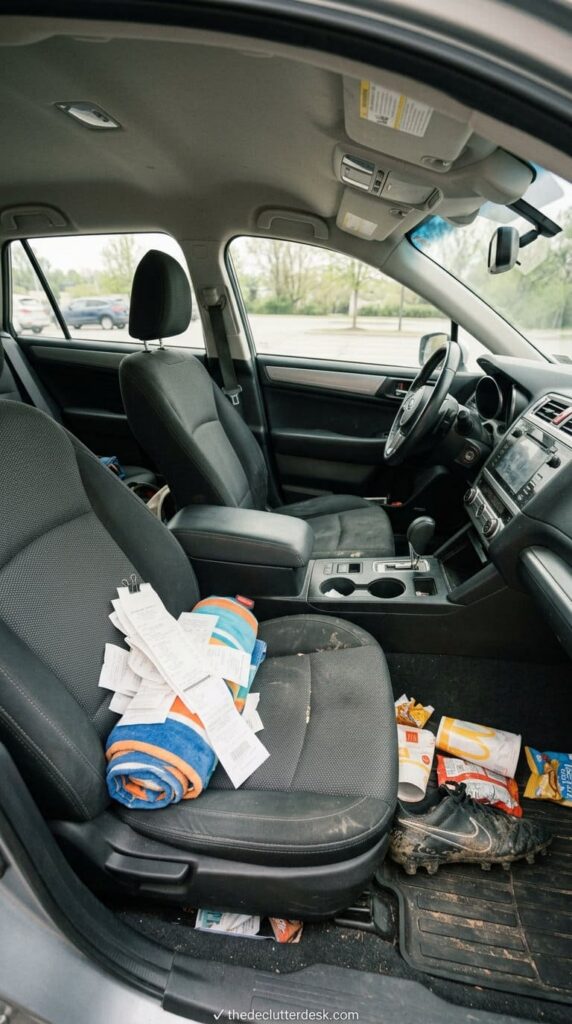
Before you touch a single item, it helps to know what you’re actually dealing with. Most cars accumulate clutter in the same five places, and by late August they’re usually packed.
1. Trash and food wrappers.
Fast food bags, water bottles, straw wrappers, the occasional french fry that rolled under the seat in July and is now a permanent resident. This is the easiest pile and also the one most people are embarrassed to admit has been there since June.
The mistake: leaving a half-full water bottle in a hot trunk for weeks. It doesn’t just go flat, it starts growing that sour “old gym bag” smell, and by the time you notice it the odor has already soaked into the carpet padding underneath.
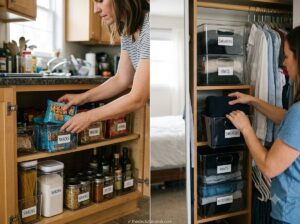
5 minutes: clear the floor and cup holders, nothing more.
20 minutes: also pull the seats forward and check under the seat rails, side door pockets, and seatback pockets, that’s where wrappers actually hide.
If you’ve got kids or drive long distances: do the trash pass the same day a road trip or practice ends, not the following weekend. Juice boxes and snack wrappers pile up fast enough that “next weekend” quietly becomes three weeks.
2. Kids’ summer and sports gear.
Cleats, a soccer ball that’s half-flat, a swim bag with a suit that’s still slightly damp, sunscreen tubes rolling around the floor. Kids’ stuff multiplies in a car faster than almost anything else because nobody wants to carry it inside after a long practice or a beach day.
The mistake: zipping a damp swimsuit into a sealed bag and leaving it in the trunk. Wet fabric in a closed bag starts to smell musty within a day or two, and by the next practice it’s actively unpleasant to touch.
New tip: hang a small mesh bag from a headrest hook for anything wet. It air-dries on the drive home instead of festering in a sealed compartment.
5 minutes: gather the visible gear, cleats, ball, bags, into one pile by the trunk.
20 minutes: also check under the seats and along the trunk liner edges for stray shin guards, single socks, and loose sunscreen tubes.

This is the bin that makes the "bring inside" and "keep in car" piles workable in the first place. It folds flat when empty, which matters since the whole point of the sorting system is not adding permanent clutter back to the trunk.
Shop NowThis post contains affiliate links. We may earn a commission on qualifying purchases at no extra cost to you.
If you’ve got multiple kids in sports: one bin per kid beats one shared pile. Shared gear piles are where a single missing cleat turns into a 10-minute search right before practice.
3. Paperwork and receipts.
Parking stubs, oil change receipts, that envelope from the DMV you meant to deal with in April, gas station receipts stuffed in the console. None of it is dangerous, it’s just dead weight that makes the glovebox impossible to actually use.
New tip: the glovebox folder system. Keep one small accordion folder or envelope for the papers you actually need on the road, registration, insurance card, an emergency contact sheet. Everything else, old receipts, expired coupons, gets pulled out and either tossed or filed at home, so the folder never becomes its own junk pile.
The mistake: letting registration and insurance cards get buried under loose fast-food receipts. It’s the one category where “I’ll deal with it later” actually has a real cost, you don’t want to be digging through a fast-food receipt pile at a traffic stop.
5 minutes: pull every loose paper from the console and door pockets into one stack.
20 minutes: sort that stack into the glovebox folder plus a “file at home” pile, and actually carry the second pile inside.
If you’re headed on a road trip: toll receipts and parking stubs pile up fast over multiple driving days. A quick purge each night at the hotel keeps the glovebox folder from filling back up before you’re even home.
4. “Emergency” items you don’t actually need.
Old jumper cables that don’t fit your current battery, a half-used bag of cat litter for traction that’s been there since a winter three years ago, expired snacks you bought “just in case.” Real emergency supplies matter, but a lot of what’s in this pile stopped being useful a long time ago.
What’s actually worth keeping vs. what’s outdated advice: jumper cables are cheap and never need charging, but a portable jump-starter can start your own car without flagging down another driver, which matters more if you drive long distances or off-hours. AutoGuide’s comparison of the two puts it simply, cables are the cheaper backup, a jump-starter is the more self-sufficient one, and plenty of people keep both. Either way, a set of cables that’s been rattling around uninspected for years with corroded clamps isn’t actually emergency-ready, it just looks like it is.
Check your first aid kit, don’t just glance at it. The American Red Cross recommends actually checking expiration dates and swapping out used or expired contents every three to six months for a kit that sits at home, and a car kit runs through supplies faster since heat degrades adhesives and medication even quicker. If yours hasn’t been opened since it was bought, that’s not a stocked kit, it’s a box.
The mistake: keeping bottled “emergency” water for months. Heat cycles in a closed trunk break the plastic down faster than people expect, so that water isn’t actually the safe backup it was when you bought it.
5 minutes: a visual pass, toss anything obviously damaged, crushed, or visibly expired.
20 minutes: actually test what’s left, check first aid kit dates, flashlight batteries, and jumper cable clamps for corrosion.
If you drive long road trips: this is the category worth upgrading, not just decluttering. A portable jump-starter and a real, checked first aid kit matter more when you’re two hours from the nearest exit than they do on a daily school run.
5. Beach and pool gear.
Sandy towels, a deflating pool float, flip-flops that don’t match, a cooler with something questionable still inside. This is the most seasonal pile of the five, and it’s the one that’s actively rotting your trunk space right now if you haven’t touched it since your last trip to the water.
The mistake: shoving sandy gear back in the trunk “for next weekend.” Sand works its way into seat tracks and upholstery seams, where it acts like sandpaper every time the seat slides, and it’s a lot harder to vacuum out once it’s ground in than it would’ve been to shake out that same day.
New tip: rinse and fully air-dry beach gear before it goes back in the car, and keep a dedicated mesh bag just for wet or sandy items so it never mixes with the dry stuff. A sealed bin with damp gear inside is exactly how a beach towel starts smelling like a gym bag by the next trip.
5 minutes: shake out loose sand and bag anything visibly wet or sandy.
20 minutes: actually rinse and dry gear before storing it, and empty the cooler completely, don’t just close the lid on it.
If you’re at the beach multiple times a week: keep the wet bag as a standing fixture instead of a one-time fix. Re-sorting the same sandy pile every single weekend is the definition of a system that isn’t actually working.
Short on time today? If you can only tackle 1 or 2 categories before a road trip, start with trash and beach gear, they’re the two most likely to smell or stain if left another week in trunk heat. Add the glovebox folder from category 3 next if you’re actually leaving town, hunting for your registration at a toll booth or a rental counter is its own special kind of stressful.
The 3 questions to ask about anything in your car
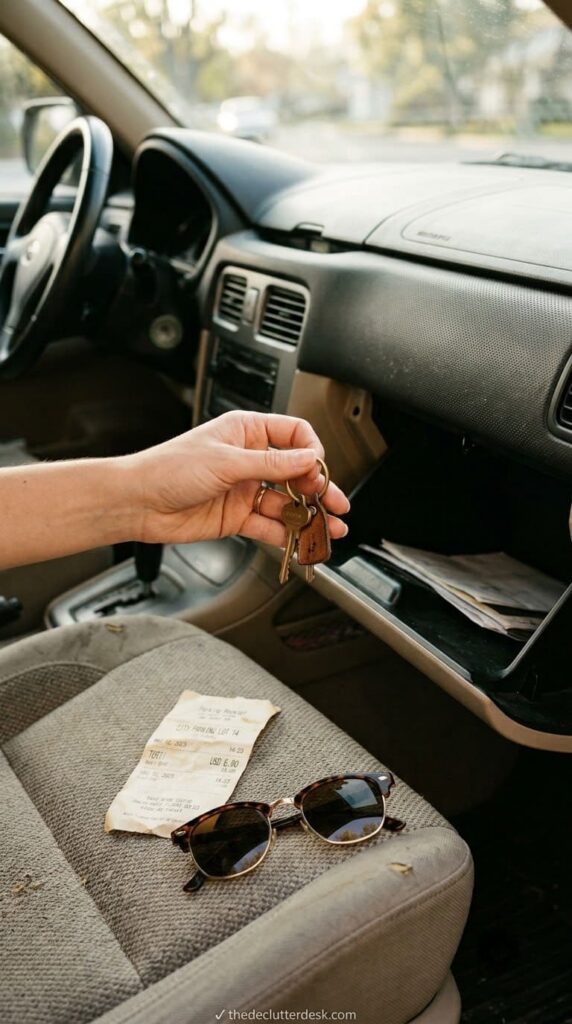
Run every item from all 5 categories through the same 3 questions. This is the same framework we’ll use for every Keep-or-Toss guide on this site, so it’s worth memorizing once.
Have I used this in the last two trips? Not “might I use it someday,” actually used it, in the car, in the last two times you drove somewhere. If the answer is no, it’s a strong candidate to go.
If it disappeared today, would I actually replace it? Some things you’d rebuy without thinking twice, a phone charger, an ice scraper in winter. A lot of car clutter fails this test immediately. You wouldn’t spend $4 to replace that half-empty bag of pretzels.
Does this belong in the car, or does it belong somewhere else in the house? Paperwork belongs in a filing system, not a console. A jacket belongs in a closet most of the year. The car isn’t a storage unit, it’s a vehicle, and treating it like overflow storage is exactly how you end up here every August.
Amelia Pleasant Kennedy, a certified professional organizer and founder of A Pleasant Solution, says cars are “a sneaky place for clutter to appear” because the mess builds up in small daily increments instead of one big obvious pile. That’s honestly the whole reason a car declutter sneaks up on people every year.
The sorting system: 4 piles, one bin
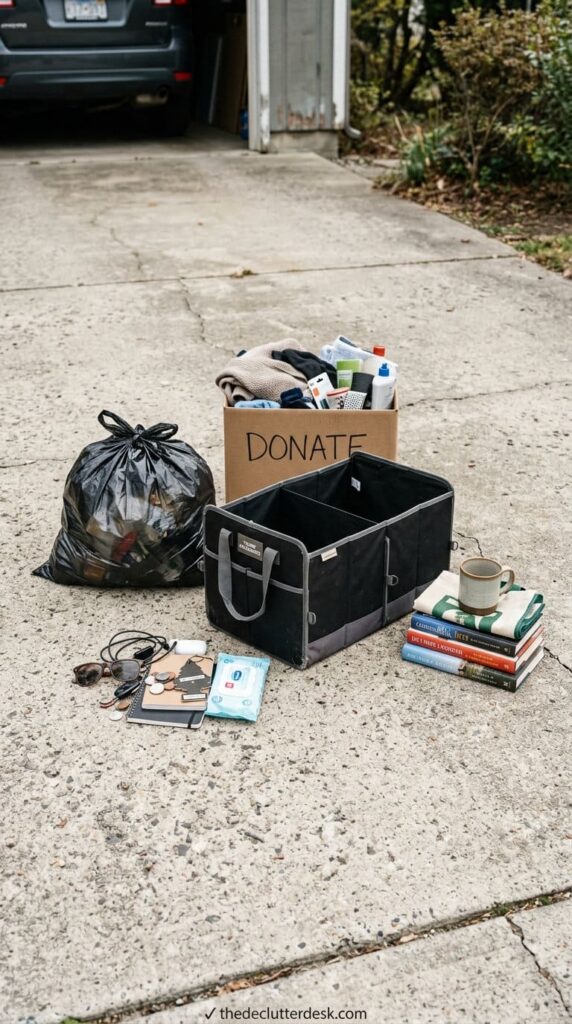
Once you’ve run the 3 questions, everything you pulled out of the car sorts into 4 piles. Keep it that simple, more categories just slow you down.
Trash. Straight to the bag. Anything from category 1 lands here almost entirely, along with expired items from category 4.
Donate. Usable kids’ gear that’s been outgrown, extra towels, gear you’d never buy again but someone else genuinely could use. Goodwill and similar donation centers take most of this, just check their current list before you drop off anything electronic or damaged.
Keep in car. A small, deliberate list. Think one phone charger, a real first aid kit, a folding umbrella, maybe a tire gauge. This pile should be short enough to fit in one console organizer, not spread across every door pocket.
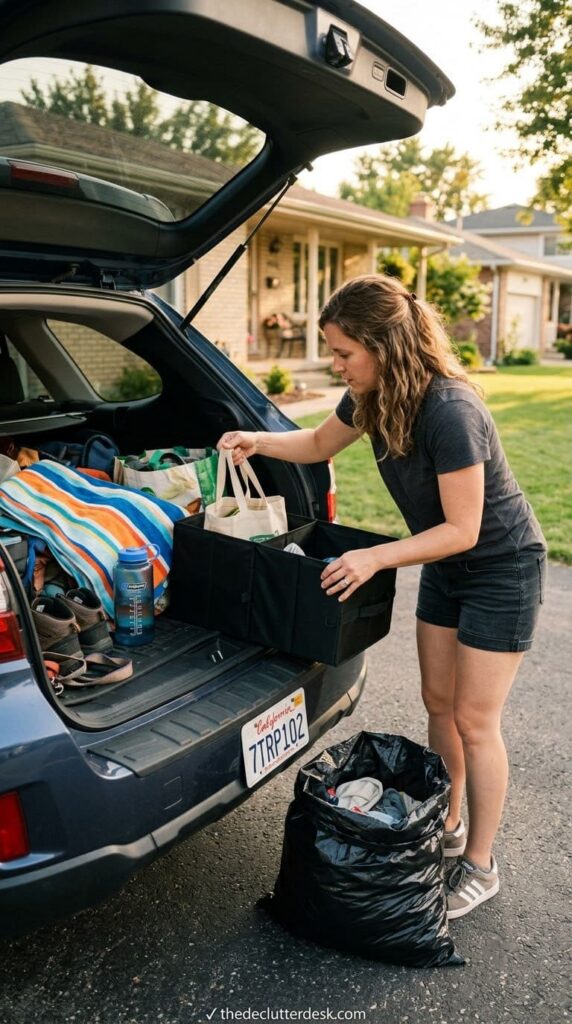
Bring inside. Paperwork that needs filing, seasonal gear that’s done for the year, anything that passed the 3 questions but doesn’t need to live in the car specifically. A trunk organizer bin is what makes this pile possible in the first place, it gives everything a temporary home on the drive to wherever it’s actually going.
Sort as you go instead of piling everything on the driveway first. It’s kind of a wild amount of stuff for a car that seats five people, but it happens every single summer without fail.
The maintenance rule: the 2-minute Friday reset
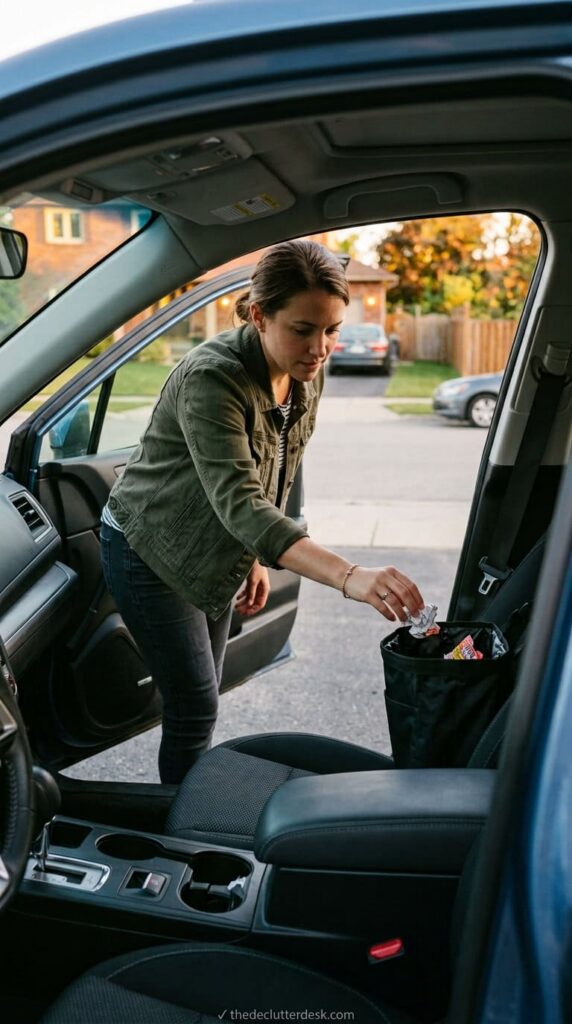
One rule keeps this from becoming a September-only project again. Every Friday, before the weekend starts, do a 2-minute pass: pull any trash, toss loose wrappers, and take anything that migrated in during the week back inside.
This isn’t a deep clean. It’s the equivalent of not letting dishes pile up in the sink. Two minutes a week is nothing compared to the 25-minute reset you just did, and it’s the only thing standing between you and doing this exact same project again next August.
I’ll admit I skip this some weeks, and it always shows by the following Friday. A stray receipt here, a granola bar wrapper there. But picking it back up the next week is way easier than letting three months build up again.
Why this actually matters beyond looking tidy
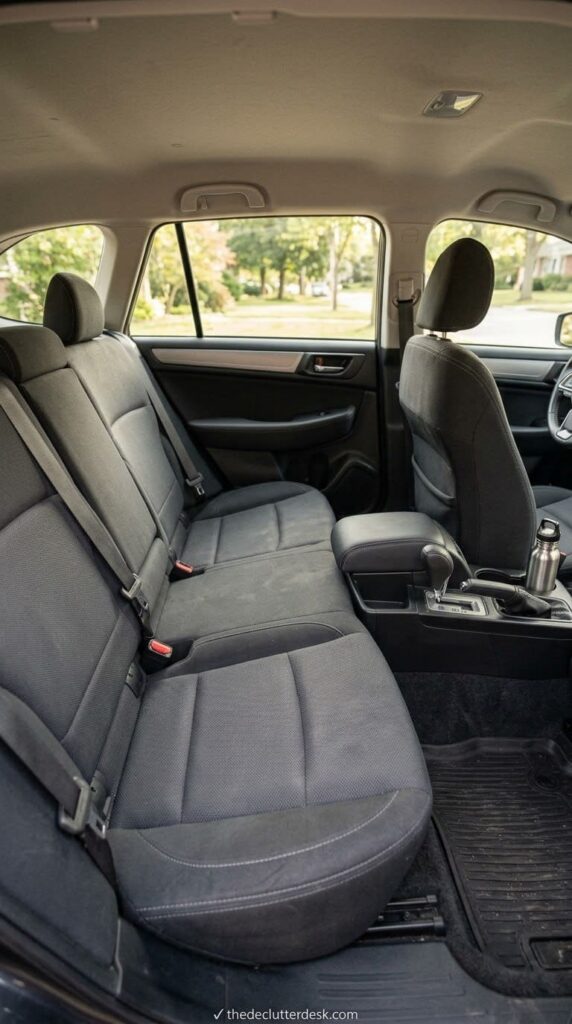
A cluttered car isn’t just annoying, it costs real money in two specific ways most declutter articles skip entirely.
Extra weight drags down fuel economy, and the effect is bigger in stop-and-go city driving than on the highway, according to the U.S. Department of Energy’s fuel economy guidance. It’s not going to bankrupt you over a bag of trash, but a trunk full of unused gear, old tools, and a half-broken folding chair adds up faster than people think.
Clutter also shows up at trade-in time. AAA notes that a messy interior can hurt your car’s resale value, since buyers and dealers read a cluttered cabin as a signal about how the vehicle was actually cared for, not just how it looks that day. Removing personal items and cleaning the interior before an appraisal is standard advice from AAA’s own car-care guidance, and it’s advice that costs nothing but 25 minutes.
Here’s specifically what an appraiser is looking at. CarGurus’ trade-in prep guidance points to the glovebox, center console, door pockets, cup holders, and trunk as the exact spots that get checked, and a clean, empty cabin lets the appraiser judge the actual vehicle instead of getting distracted by your stuff. A trunk full of gear also reads as a smaller trunk, and that’s a mark against the car even if nothing is actually wrong with it.
None of this means the trunk has to be empty every day. It just means the 5 categories above shouldn’t be sitting there the one day someone’s actually pricing your car.
FAQs
How long does it actually take to declutter a car?
Budget about 25 to 30 minutes for all 5 categories if you’re doing a normal family car solo. A minivan with 3 kids’ worth of gear will run closer to 40. Either way, it’s a single afternoon project, not a weekend one.
What should always stay in the car, even after decluttering?
A real first aid kit, a phone charger, a tire gauge, and a folding umbrella cover most situations. Beyond that, ask the 3 questions before anything earns a permanent spot back in the console.
Does a cluttered car really affect gas mileage?
Yes, though the effect from typical household clutter is small on its own, roughly 1% per 100 pounds according to fuel economy research. It’s more noticeable when you add up a full trunk of gear, tools, and forgotten bags over an entire summer.
Should I declutter before or after a road trip?
Before, if you can. Starting a trip with an already-cluttered car means everything from the trip gets layered on top of the mess that was already there, and you end up doing the same job twice by September.
Products We Recommend
This post contains affiliate links. We may earn a commission on qualifying purchases at no extra cost to you.
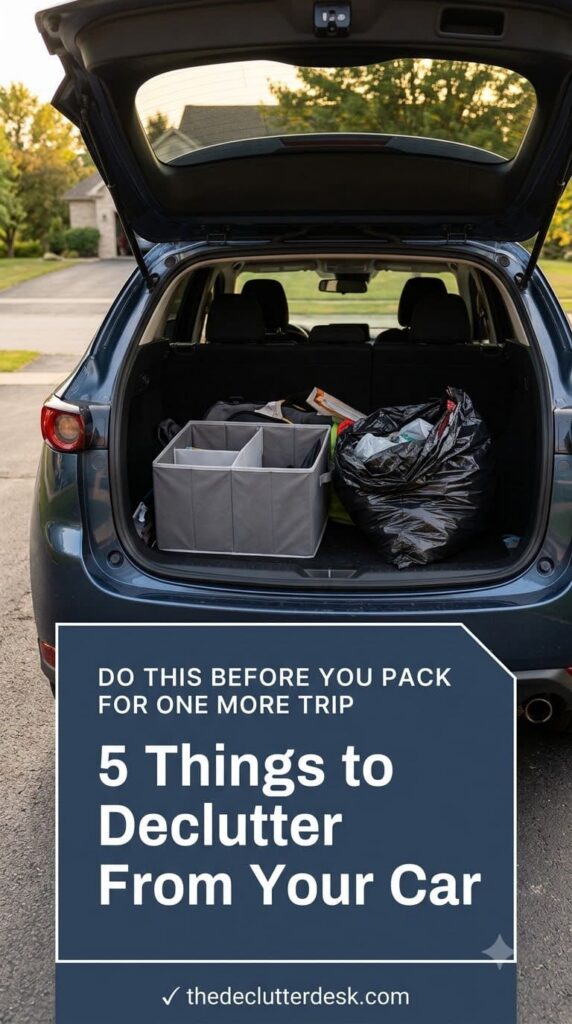
FORTEM Trunk Organizer, 50L Collapsible
This is the bin that makes the "bring inside" and "keep in car" piles workable in the first place. It folds flat when empty, which matters since the whole point of the sorting system is not adding permanent clutter back to the trunk.
Shop Now
Oneyus Car Backseat Organizer with Table Tray, 2-Pack
Solves the kids' gear problem specifically, cleats and water bottles get their own pockets instead of sliding around the floor between the front and back seats, and the fold-away tray keeps snacks off the upholstery on the next road trip.
Shop now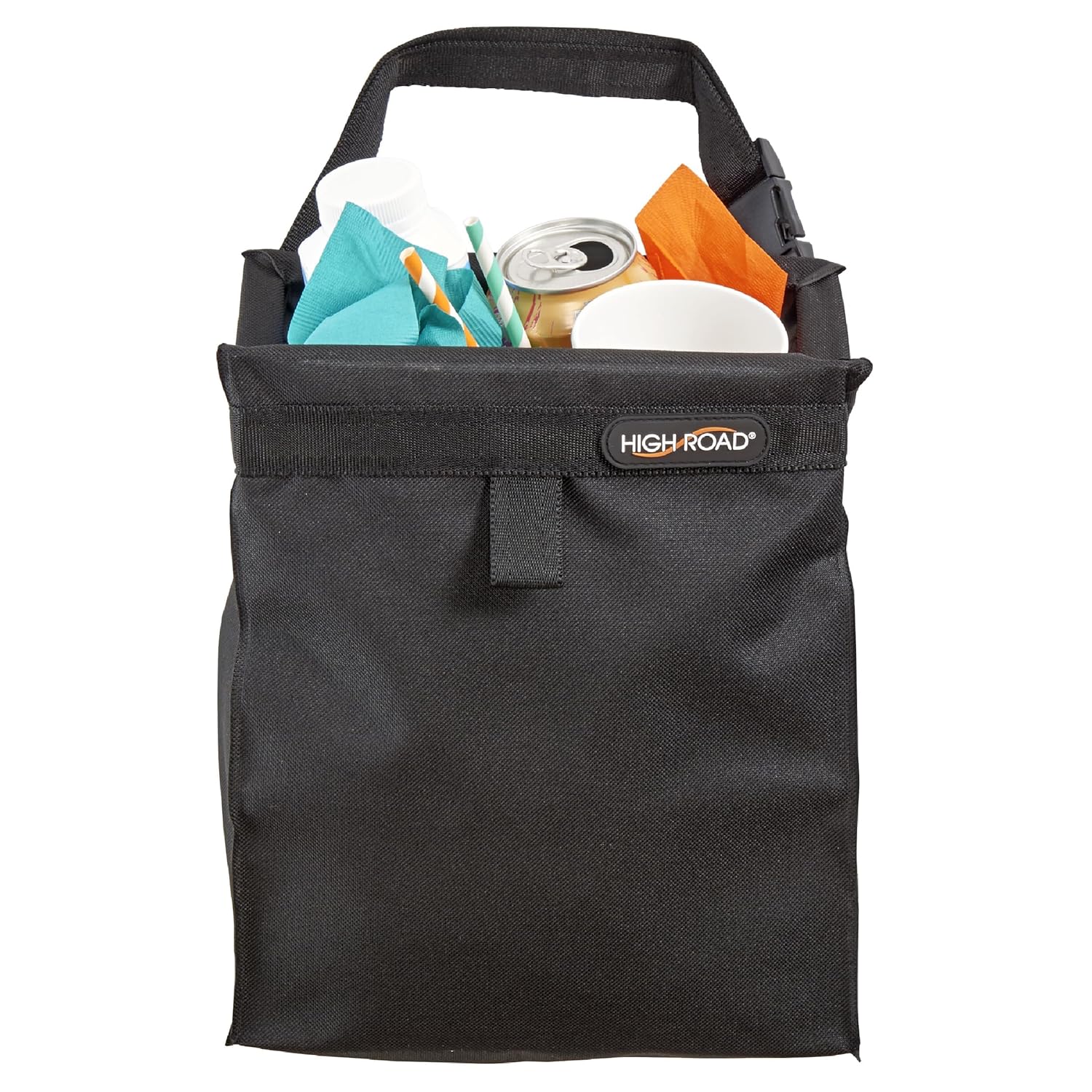
High Road TrashStash Hanging Car Trash Can
This is what makes the 2-minute Friday reset actually possible. Without a dedicated, leakproof trash spot, wrappers and receipts just go back to piling up in the console within a week.
Shop nowNever miss an update — choose TheDeclutterDesk as your preferred source on Google.
How it works: Tap the button below to open Google's settings page, then check the box next to TheDeclutterDesk.
Tap the checkbox to turn it blue — that's how you know it's set.